How to build a hydration training plan before race day
0 Comments
Key Takeaways
- There's no magic hourly fluid target. Start with a sweat-rate test by weighing yourself before and after a representative workout and tracking what you drink.
- Your needs change with heat, humidity, altitude, intensity, and duration, so build a flexible range based on conditions you've actually trained in.
- Test your electrolyte product, concentration, gear, and gut tolerance during long training sessions, not on race day.
- A few weeks before your race, do a race-specific dress rehearsal, then finalize your plan and stop experimenting.
Most training is hard work. Hill repeats, 400 meter reps, pre-dawn workouts and evenings at the gym. But what if there was an aspect of training that was actually easy—and nailing it would have a bigger impact on your race than all of that hard stuff?
Say hello to hydration.
For many athletes, hydration is something they figure out on the fly: drink when they’re thirsty, grab whatever’s at the aid station, mix and match hydration supplements with wildly different specs.
That might work for a short run. But several hours into a marathon, gravel race, or ultra, “I’ll just drink when I feel like it” can quickly turn into “I’ll just catch a ride back at the next aid station.”
Your hydration needs are like your diary—personal. And they can change with temperature, humidity, altitude, intensity, duration and for women, their cycle. The good news? Hydration is trainable. And it’s a heck of a lot easier than hill repeats.
A hydration training plan gives you a chance to figure out what works for your body before race day, so when things get hard, you can worry about your legs, not your liquids.
All about that baseline
There’s no magic number that every runner should drink per hour.
Some people sweat a lot. Some people barely seem to sweat at all. And even your own sweat rate can change depending on the conditions and how hard you’re working.
That’s why a good running hydration plan starts with getting a general idea of your own fluid losses.
One way to do that is with a sweat-rate test. The old-fashioned, most affordable way is to weigh yourself before and after a representative workout, and keep track of how much fluid you consume during the session. Note the workout duration, temperature, humidity, and intensity, too.
The goal here isn’t to find one perfect number and follow it forever and ever—you’re not a human spreadsheet. It’s to establish a baseline so you can start recognizing how your body responds to different conditions.
Pay attention to big swings
Once you have a baseline, start paying attention to what makes your hydration needs change.
A hard effort on a hot, humid day is a very different hydration challenge than an easy run on a crisp fall morning. Other factors can make a difference, too:
-
Temperature and humidity
-
Altitude
-
Workout intensity
-
Duration
-
Clothing and gear
-
Heat acclimation
That means your race hydration plan shouldn’t necessarily be one rigid formula.
Instead, build a range based on conditions you’ve actually experienced in training. If your goal race is likely to be hot, practice in the heat. If you’re racing at altitude, get some experience with those conditions. The more scenarios you practice, the easier it is to adjust when race day inevitably throws you a curveball.
Practice makes perfect hydrating
Knowing what you should drink is one thing. Actually drinking it while running for five hours is another.
Start practicing your hydration routine during regular training. Bring the bottles, flasks, or hydration vest you plan to use for your race and take consistent sips throughout your workout. Pay attention to what feels comfortable.
Are you constantly carrying more fluid than you need? Do you wait until you’re desperately thirsty before taking a drink? Does your stomach feel good with the amount you’re drinking at a time?
You’re also practicing the logistics. Can you grab your bottle without stopping? Can you refill your flask quickly? If your race has aid stations, do you know roughly when you’ll need to top off?
These details might seem minor during a two-hour training run. They become considerably more important when you’re tired, sweaty, and trying to remember what day it is at mile 50.
You can’t send it without salt
Hydration isn’t just about water. When you sweat, you lose electrolytes, including sodium (raise your hand if you return from most workouts with white lines all over your gear). How much you lose varies from person to person, which is another reason why “just copy Killian” is not a viable strategy. Unless you’re Killian, in which case you don’t need to be reading this blog.
Test your electrolyte product and concentration during training. Pay attention to how it tastes, how it feels in your stomach, and whether you actually want to keep drinking it after several hours.
Because here’s an important part of a hydration strategy: it doesn’t work if you can’t follow it.
A product can have a beautifully engineered nutrition label, but if you’re sick of the flavor after three bottles, that’s useful information to discover during training rather than mid-way through your A race.
Match your input to your output
Your hydration strategy doesn’t have to be complicated. In fact, simpler is often better.
For shorter or easier efforts where you primarily need fluid and electrolytes, Tailwind Rapid Hydration provides hydration without adding a significant carbohydrate fueling component.
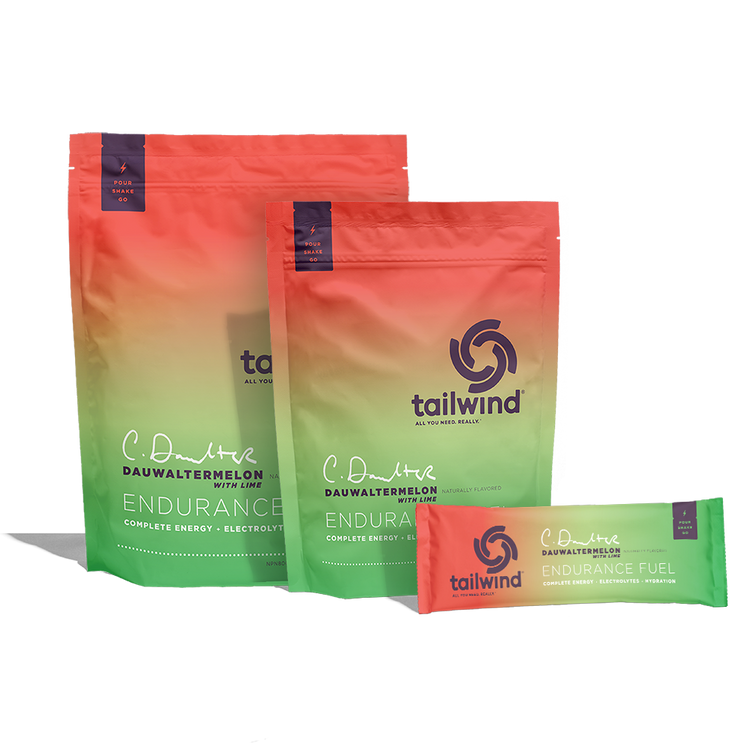
For longer endurance sessions where you need both hydration and energy, Tailwind Endurance Fuel combines fluid, electrolytes, and carbohydrates in one drink.
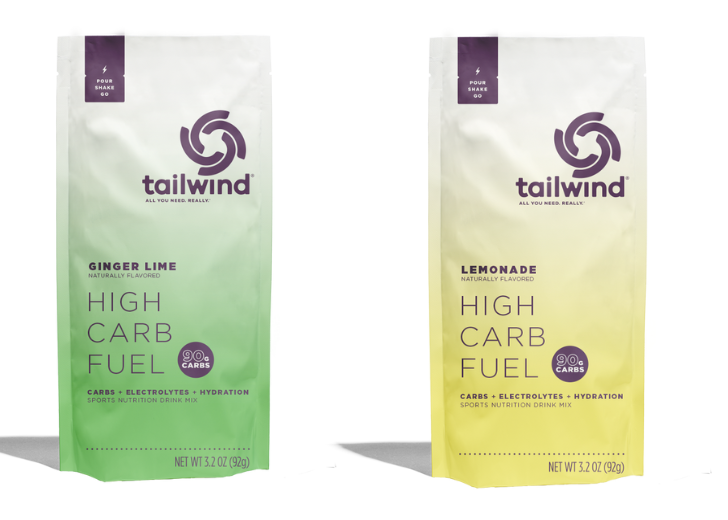
And when you’re specifically practicing higher carbohydrate intake for long or demanding efforts, Tailwind High Carb Fuel has you covered.
The important thing is to use these products during training, not save them for race day.
Your goal is to know exactly what works, how much you need to drink, what concentration feels best, and how your gut responds—so on race day, the only thing upsetting your stomach is butterflies.
Get your gut in the game
Long-distance hydration and fueling can take some getting used to.
If you suddenly try to drink and consume significantly more carbohydrates than you’re accustomed to on race day, your stomach may have opinions. And they might be strong ones.
That’s why long training sessions are the perfect place to gradually practice your race-day intake. Experiment with timing, concentration, fluid volume, and carbohydrate intake. Make small adjustments based on how you actually feel and don’t give up if the first few attempts are challenging. Just like speed, gut training takes time.
The race-day dress rehearsal
A few weeks before your goal event, put everything together for a race-specific training session.
It doesn’t have to perfectly replicate race day, but get as close as practical:
-
Similar duration and intensity
-
Same hydration products
-
Same concentration
-
Same bottles, flasks, or vest
-
Similar pre-race hydration routine
-
Similar fueling strategy
-
Practice your refill or aid-station plan
Then take notes. Did you drink what you planned? Did your stomach feel good? Did you have enough fluid between refills? Did you actually want to drink what you brought? This is where you make changes without costing yourself a podium spot.
Build your plan, but keep it flex
Your hydration training plan can evolve throughout your training cycle.
Early training: Establish your baseline and learn your general sweat rate.
Build phase: Practice fluid, electrolytes, and fueling during longer workouts. Slowly build up to race-day goals.
Peak training: Rehearse your race-specific hydration strategy. Make tweaks as needed.
Race prep: Finalize your plan and stop experimenting.
Don’t be afraid to keep dialing it in all the way up through those last weeks of training. Maybe you need more fluid when it’s humid. Maybe a certain concentration doesn’t sit well after three hours. Maybe you’re great at drinking early but tend to forget once the workout gets hard. That’s all valuable information.
Race day is for executing, not experimenting
There’s already plenty to think about on race morning. Logistics. Nutrition. Gear. The weather. Course changes. Whether you actually got all four pins for your bib.
Hydration doesn’t need to be another unknown. Practice it. Pay attention to your body. Learn how your needs change with conditions. Build a strategy that’s simple enough to repeat and flexible enough to adapt.
You don’t have to go crazy with your hydration plan. Follow these guidelines, keep it simple, and give it as least as much consideration as your Strava title.